
Electroplating is one of the most widely used surface finishing processes in modern manufacturing. It improves the appearance, durability, corrosion resistance, and performance of metal and plastic components by applying a thin layer of another metal to the surface.
From automotive parts and bathroom fittings to electrical components and consumer products, electroplating plays a vital role in enhancing both functionality and aesthetics.
If you’re wondering what electroplating is, how it works, and where it’s used, this guide explains everything you need to know.
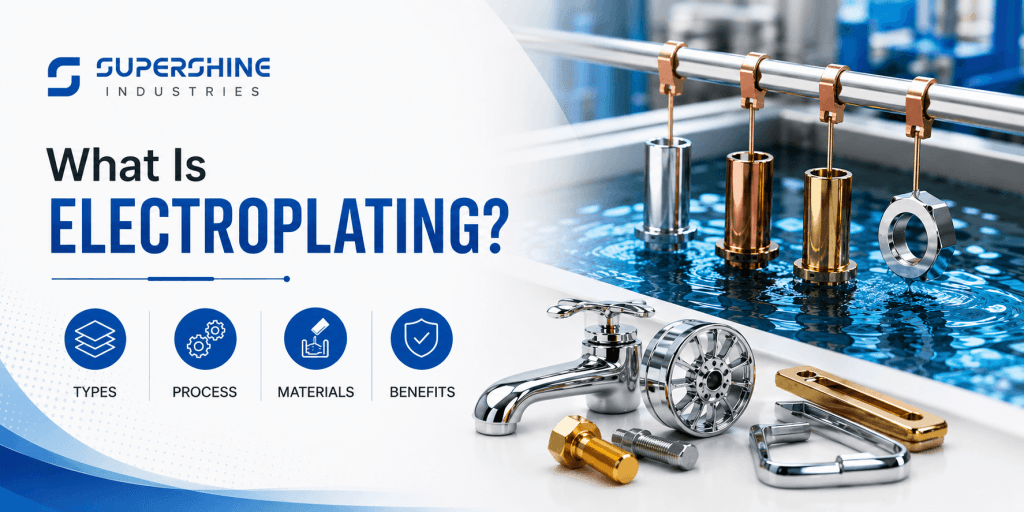
Electroplating is an electrochemical process by which a thin layer of metal is deposited on the surface of some other material using an electric current.
The substrate is the object being coated, and is dipped in a chemical solution of metal ions. The metal ions adhere to the substrate as electricity is transferred through the solution forming a uniform protective coating.
The finished surface may improve corrosion resistance, wear resistance, electrical conductivity, appearance, or all of these depending on the metal used.
Simple steps can be easier to understand how electroplating works.
Part one is washed to remove dirt, grease, oil, oxidation and other contaminants.
Even small impurities can affect the quality of coatings, so careful cleaning practices are essential.
Depending on the material, further treatments (such as polishing, etching, activation, etc.) may be performed to assist with adhesion improvement.
The device is put in an electrolyte medium with dissolved metal ions.
The plating metal plays as an electrode in the solution.
A controlled current of electricity is fed into the chamber through the mixture.
Metal ions move towards the part and give a very thin – but uniform- coating.
The component is rinsed, inspected, polished, and ready for final application after plating.
The result is a strong, beautiful, and serviceable surface finish.
Different applications require different plating metals.
The right choice is determined by the product’s intended use.
Chrome plating provides:
Common applications are automotive parts, sanitaryware, furniture hardware, and consumer goods.
Nickel plating offers:
Applied to engineering and industrial products including decorative products
Zinc plating protects parts for use with steel to prevent rust and corrosion.
Standard use cases are the following:
Copper plating improves:
Gold plating is often chosen where good electrical conductivity and corrosion resistance is desired.
Applications include:
Silver plating provides:
Frequently used in electrical and electronic applications.
Electroplating materials vary from application to application.
Electroplating can also be used:
Common plating materials include:
For other industries, each plating material has different performance characteristics.
Benefits of Electroplating go way beyond just enhancing appearance.
Electroplated coatings protect components from moisture, chemicals, and environmental exposure.
The plated surface becomes more resistant to abrasion and daily wear.
Decorative finishes create premium-looking products suitable for both consumer and industrial markets.
The protective coatings extend the lifespan of components by reducing corrosion and surface damage.
Certain plating materials enhance conductivity for electrical and electronic components.
Electroplating offers many of the advantages of costly metals without manufacturing an entire component from those materials.
Electroplating is used in many different fields around the world.
These include:
It is very versatile and hence one of the major finishing processes in contemporary manufacturing.
Supershine Industries offers precision surface finishing solutions that cater to the needs of OEMs and manufacturers in India.
We collaborate with manufacturers to provide stable, high-quality finishes that improve both performance and looks of products through our experienced team.
OEM manufacturers depend on consistent quality and repeatable processes.
Professional electroplating benefits OEMs by offering:
Having an experienced surface finishing partner ensures components adhere to industry standards and customer expectations.
Manufacturing different types of things from automotive parts, sanitaryware, electrical equipment, and also from engineering to consumer products, electroplating is one of the ways to help enhance durability, aesthetics, and long-term performance.
Selecting a surface finishing partner also guarantees uniform quality and reliable finishes according to the industry.
At Supershine Industries, we combine advanced electroplating technologies with precision manufacturing expertise to deliver high-quality surface finishing solutions for OEMs and manufacturers across India. From decorative chrome plating to specialised finishing for plastic and metal components, our team is committed to helping you produce products that stand out in both performance and appearance.
Looking for reliable electroplating and surface finishing solutions? Contact Supershine Industries today to discuss your project and discover how our expertise can add lasting value to your products.

Find clear answers to common questions.
Electroplating is the electrochemical process of coating an object or material with a layer of metal using electricity, to improve its appearance, durability, corrosion resistance, and performance.
Electroplating is a method used to place a component in a chemical solution containing metal ions and apply an electric current. The metal ions attach to the surface forming a protective covering.
These comprise chrome plating, nickel plating, zinc plating, copper plating, gold plating, and silver plating.
Steel, stainless steel, brass, copper, zinc die cast parts, aluminium (if prepared), and specially prepared plastic components may also be electroplated.
Electroplating increases corrosion resistance, wear resistance, appearance, electrical conductivity, product durability, and overall component performance.
Supershine Plating has been a leader in plating-on-plastic for over 20 years, specializing in selective plating with a variety of finishes.
05 Windsor CHS, Near Sai mandir, Ashokvan, Shiv Vallabh road, Borivali (East), Mumbai 400068. Maharashtra, India.
© 2026 Supershine Industries. All Rights Reserved.