
Product success in today’s competitive manufacturing environment is no longer merely a product or an easy, functional thing to make; it must incorporate more than that. The desire from customers for durability, modern aesthetics, and a premium look is higher than ever.
At the same time, manufacturers will constantly be expected to keep putting pressure on their products to shed weight, lower their production costs and increase efficiency without letting go of quality. The changing necessity of these things has served to speed up the adoption of chrome plating on plastic (POP) throughout many different areas.
The chrome-plated plastic elements are able to combine engineering plastics’ design versatility with metallic finishes to create a package that meets engineering and commercial requirements. Today,plating on plastic is popular in automotive, appliance, sanitaryware, electronics, and industrial fields where appearance has to be matched with durability and production efficiency.
With OEMs investing a lot of effort toward designing lightweight and cost-effective manufacturing methods in their designs, POP has been one of the most stable and reliable decorative surface finishing technologies.
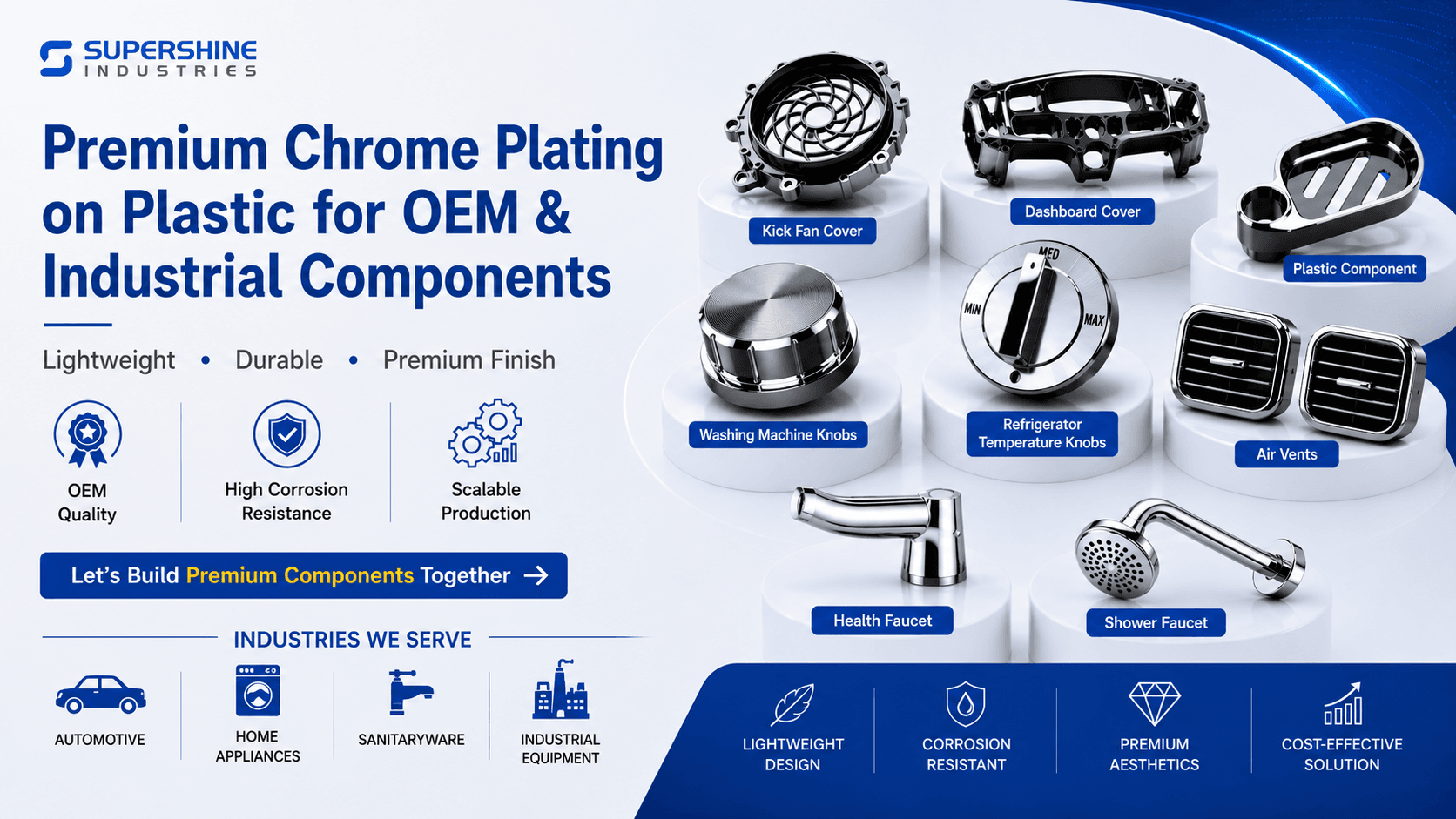
A decade later, today’s product design is dominated by lightweight. In automotive manufacturing, it is efficient to use less weight in materials thus contributing to improved fuel efficiency, lower emissions, and greater vehicle performance–that can also be a significant result.
Similar trends have appeared in consumer appliances, industrial equipment and so forth, manufacturers now are looking for material that saves cost and maintains the excellent appearance of products. Historically, metal parts have been employed to produce luxe surfaces. Even though metal typically adds weight for products, requires additional machining, and can add significant manufacturing costs.
Plating chrome on plastic offers a realistic alternative in that it enables manufacturers to fabricate parts with a close-to-polished metal appearance, which is considerably lighter and cheaper to fabricate. A significant advantage is design versatility.
The production of intricate shapes, fine lines, and bespoke design characteristics difficult or expensive to manufacture using solid metal is possible with injection molding. That flexibility allows designers more leeway and allows manufacturers to smooth the way for production.
Thus chrome plated plastic has emerged as an industrial/market solution for companies who value a combination of both appearance, function and manufacturing efficiency.
For any chrome-plated plastic device the quality and durability depend on a very well controlled manufacturing process. Plastic materials are not conductive by nature, unlike metals, and must be prepared separately before electroplating can proceed.
The process starts with high-quality injection-molded components obtained via plating-grade ABS and ABS-PC materials. The choice of material is crucial since the quality of substrate is a key factor influencing adhesion to plating, surface smoothness, and overall performance of the component. After molding, parts are cleaned and prepared for plating by various cleaning and preparation steps.
The plastic surface is then chemically treated to form microscopic anchor points for a strong connection of the substrate to the next metallic layers to form. When the surface is activated, a conductive layer is applied, electroplating may be done. Various metal layers are put on, including copper, nickel, and chrome, in series.
Each layer has its different functions, contributing to adhesion, corrosion resistance, brightness, surface leveling, and long term durability. The final layer of chrome gives the final metallic shiny finish for quality products. But looks alone aren’t sufficient. Progressive chrome plating systems are capable of achieving corrosion resistance, environmental durability, and persistent long-term reliability.
There are many measurable engineering and business benefits behind the widespread adoption of chrome plating on plastic. Weight reduction is one of the most beneficial outcomes. Replacing metal parts with plated plastic alternatives allows manufacturers to decrease overall weight while pleasing the eye.
This is especially important in the automotive industry as its lightweighting initiatives directly assist driving efficiency objectives. Cost optimization is another consideration. Through injection molding, high volumes of material can be efficiently produced with less wasted material and less cutting and machining at the secondary end. Manufacturers work with chrome plating to get a metal-like appearance without the extra material and processing costs.
The plastic components, for example, chrome-plated plastics, have excellent design flexibility. Decorative details, symbols, logos, branding components, and intricate geometry will be embedded directly into molded components to make unique product designs, which improve their branding. Also, the advanced plating systems have resistance to corrosion, humidity, and environmental exposure, aiding the appearance and functionality during their lifetime.
POP technology has become a versatile industry-wide solution.
Automotive Components
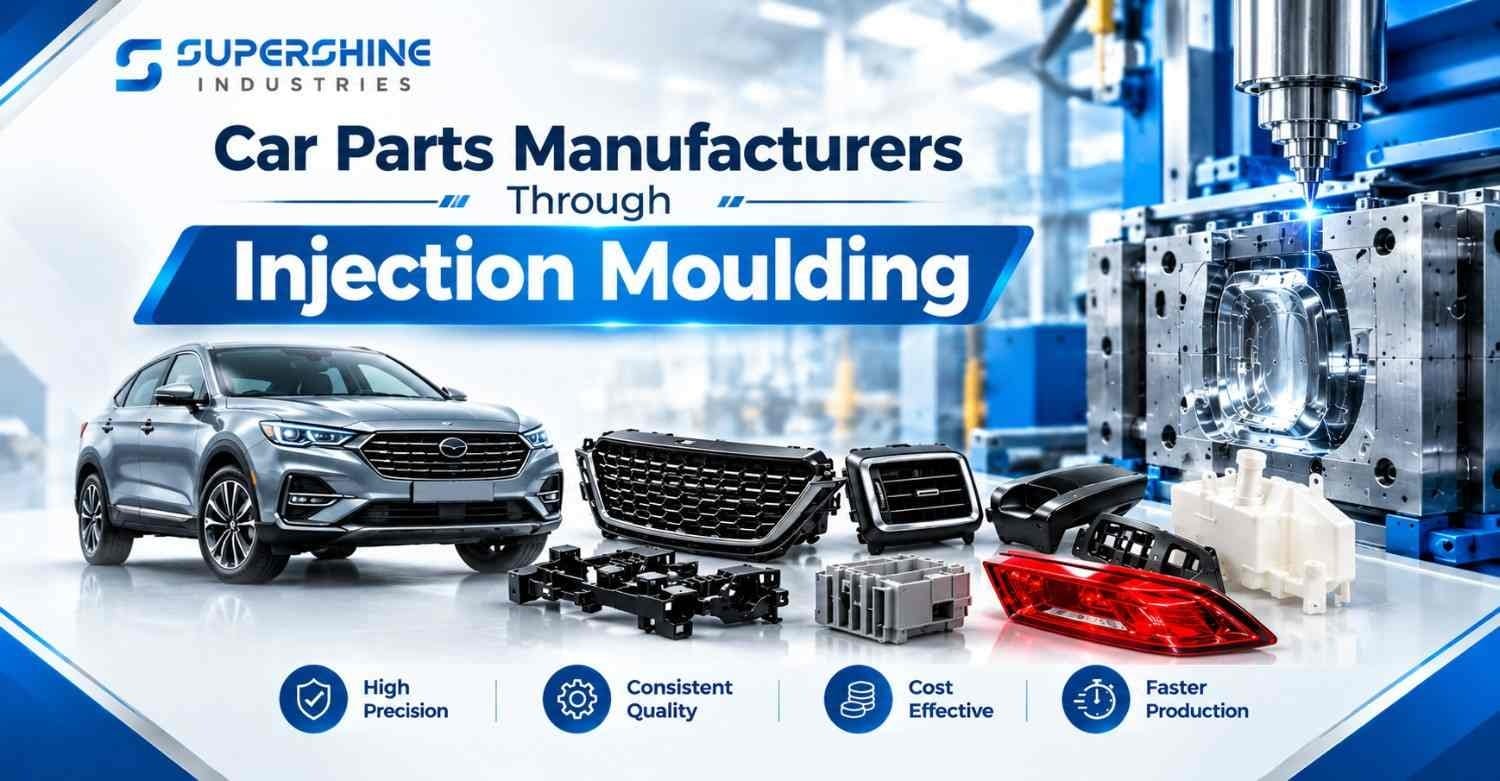
The automotive industry continues to be the largest user of chrome-plated plastic components. Chrome-plated plastic components are increasingly being used for applications on high-end vehicles where styling is important as well as when weight is a consideration.
Examples of these parts are front grille inserts, exterior trim, door handles, mirror housings, logos/emblems, instrument panel accents and decorative interior components as examples. The components must not only have an attractive appearance but also be able to endure the harsh elements throughout the life of the automobile.
Consumer Appliances
Appliance companies use chrome-plated plastic parts to improve the look of the product at a very low cost. Control knobs, display surrounds, decorative trims, and branded accents often use POP technology to ensure that the product looks high end to the consumer.
Sanitary ware & Bath Solutions
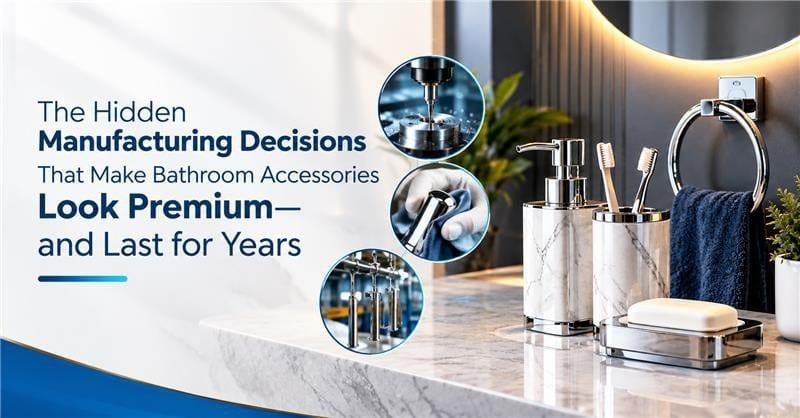
Chrome is often associated with hygiene & cleanliness, durability & modern design. Chrome-plated plastics can also be seen in bathroom or sanitaryware accessories where moisture resistance & visual appeal are both important factors.
Industrials & Consumer Products
in addition to automotive & appliance applications, you will find chrome plating on plastic in many consumer or industrial products, such as equipment housings, control surfaces, branded components, and decorative trims. Functionality, aesthetics, and manufacturing efficiency are the benefits that both POP Tech provide.
Simply making sure that products look good is typically not sufficient for OEM and Tier suppliers. All plated components are manufactured to strict quality standards that are simultaneously expected to be uniformly produced in volume thereby producing hundreds or even thousands of identical or similar products.
To provide this level of reliability, manufacturers must employ total process control throughout the entire manufacturing process. Material type, molding conditions, surface preparation, plating chemistry, and environmental conditions will all affect the final performance of the component.
Consequently, manufacturers utilize extensive testing processes to validate the quality of their components, which may include adhesion testing, corrosion testing, thickness measurement, thermal cycling, and visual inspection. Quality control processes for plated parts are designed to verify that the components meet both customer specifications and long-term performance expectations.
In addition, OEMs have begun actively searching for manufacturing partners that can provide consistent quality levels and have a proven track record in production and quality management systems within their organization. Consistency continues to be an important determinant of a successful chrome-plating operation.
Choosing the right chrome plating supplier is much more than just looking at production price or cost of materials to manufacture. Your supplier can affect product quality, reliability of supply chain and overall performance of the manufacturing process.
Most manufacturers will evaluate suppliers based on the number of units they can produce, how well they can maintain control of their processes, their established quality assurance systems and overall level of technical expertise and ability to provide support for high volume programs. Suppliers experienced in the automotive and industrial sectors will typically be very valuable because the automotive and industrial sectors are required to meet stringent industry standards for quality assurance and product performance.
A plating supplier that is reliable will have the ability to maintain quality consistency despite variations in production volumes. They will also have the necessary resources to provide technical assistance to support changes in product requirements.
At Super Shine Industries, we know how critical it is to provide our customers with dependable chrome plating solutions that will meet the needs of OEMs and component manufacturers. We have designed our business to provide excellent process controls, consistent quality and production scalability, allowing us to serve customers in various industries and applications.
Increasingly, manufacturers are looking to chrome-plated plastics to support initiatives for lightweighting, innovative design and cost optimization.
Many new opportunities are emerging for both decorative and functional chrome-plated plastics with the growth of electric vehicle production, growth in high-end consumer goods and growth in sophisticated industrial equipment.
Improvements in the plating processes and technologies, automation, process monitoring and sustainable manufacturing will continue to enhance product performance, as well as address the environmental issues associated with the production of chrome-plated plastics.
Given the pace of change within the industry, chrome-plated plastics will continue to be a key manufacturing solution for manufacturers that are looking to combine premium aesthetics with operational efficiency.
The development of chrome coating for plastic has moved beyond simply being an attractive finish to being a viable manufacturing option for OEMs to obtain a lightweight function with premium appearance, cost efficiency, and longevity all within one component.
As a result of the growing demand for functional, aesthetically pleasing and high-performing products, manufacturers are now applying chrome-plated plastics to their components or products, such as decorative trim components for vehicles, appliances and industrial equipment. With OEMs looking to find ways to reduce production costs and differentiate themselves from other competitors, OEMs need to ensure that they partner with experienced chrome plating experts to achieve these goals.
Super Shine Industries provides OEM’s and manufactures with quality chrome coatings for applications designed to produce consistent quality with scalable production and reliable long-term performance when producing products in an extremely demanding manufacturing setting.

Find answers to common questions
The technique involves an electroplating process that allows the deposition of metallic materials over non-metallic surfaces. This results in a durable, decorative metal-like finish on an item made from plastic.
Abs and abs-pc are the most frequently specified types of plastic used by manufacturers for chrome plating because of their excellent adhesion for plating and dimensional stability.
Yes, chrome-plated plastics are commonly used as components in the automotive industry due to their attractive appearance and lightweight.
When properly manufactured, chrome-plated plastics are very corrosion, humidity, uv, and other environmental resistant.
Quality of chrome plating is typically verified using adhesion testing, corrosion testing, measurement of thickness, thermal cycling testing, and visual inspections.
Original equipment manufacturers have the advantage of a lighter component, reduced manufacturing cost, greater flexibility in design, and greater efficiency in mass production, while at the same time maintaining a high end metallic appearance.
Supershine Plating has been a leader in plating-on-plastic for over 20 years, specializing in selective plating with a variety of finishes.
05 Windsor CHS, Near Sai mandir, Ashokvan, Shiv Vallabh road, Borivali (East), Mumbai 400068. Maharashtra, India.
© 2026 Supershine Industries. All Rights Reserved.