
Walk into any car showroom and the first parts you will see are often the brightest — grille bars, door handles, window surrounds and badge trims. These details make a vehicle look premium but most of them get that finish because of metal plating. For automotive manufacturers in India getting plating right is as much a business decision as it is a cosmetic one — it determines durability, brand perception and cost of every part that leaves the line.
Metal plating is the process of depositing a thin layer of metal (nickel or chromium) onto a component’s surface. The coating can be decorative, protective or both — in vehicles it turns an ordinary molded or machined part into one that has a mirror-like shine; better corrosion resistance; and a surface that can withstand daily wear.
Today many exterior and interior trims are made from engineering plastics rather than solid metal. Plastic is lighter (which increases fuel efficiency), it can be molded into shapes that would cost too much to produce in metal, plating the plastic gives the part a polished chrome look at one-third the weight.
Plated automotive trims are used for good reasons:
Plating plastic is a multi-step process — the quality of each step determines the quality of the final finish. In other words:
This is why molding and plating go hand in hand best when they are done under one roof or at least with close coordination. A trim molded without plating in mind will show flow marks, stress points or poor adhesion later on.
Automotive buyers don’t look at a plated trim to see how it looks on day one. OEMs and Tier 1 suppliers want parts to meet strict requirements for:
Quality, precision and consistency are what make a plating partner reliable; a one-time vendor isn’t. For production volumes process control is more important than any single sample.
Plated parts are found on exteriors and interiors:
Two wheeler manufacturers also use plated parts for mirror housings and decorative covers too. Demand for these finishes is increasing as Indian buyers demand more premium features at every price level.
Don’t just look at what is on the sample when you are selecting a supplier. Questions to ask: What separates good partners from bad?
A manufacturer who sees molding and finishing as one process reduces rejections, cuts lead times and avoids finger pointing when two vendors share responsibility for one part.
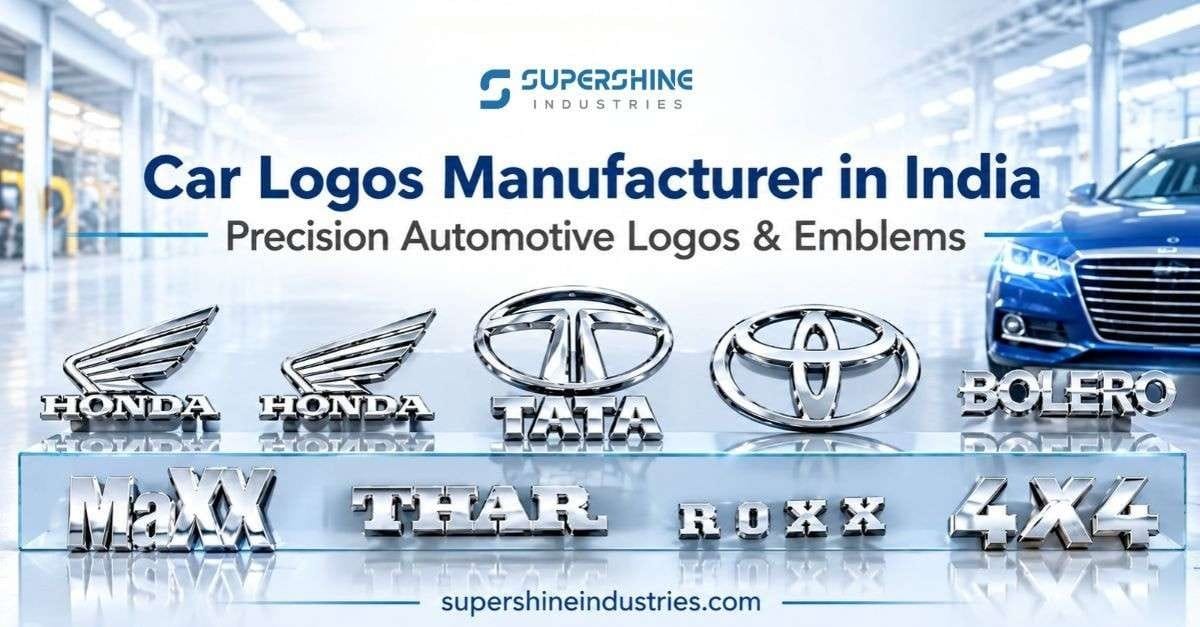
Supershine Industries is based in Mumbai and specializes in injection molding of parts that are chrome plated so each component is molded with plating in mind from the start. That palatable parts focus gives you clean surfaces, good coating adhesion and repeatable quality automotive supply chains require.
Whether it’s decorative trims or grille components or custom automotive parts – the end result is still the same: premium durable finish built to OEM and Tier-1 standards.
If you are designing a new trim or need a reliable supplier for existing parts our team can guide you in the right material selection, mold approach and finish.
See what we do by browsing chrome plating services then contact Supershine Industries with your drawings or requirements to get a quote and technical guidance.
Supershine Plating has been a leader in plating-on-plastic for over 20 years, specializing in selective plating with a variety of finishes.
05 Windsor CHS, Near Sai mandir, Ashokvan, Shiv Vallabh road, Borivali (East), Mumbai 400068. Maharashtra, India.
© 2026 Supershine Industries. All Rights Reserved.